Green Technology Trends to Watch in 2026: Market & Industry Insights
A data-driven exploration of five environmental technology trends set to redefine global markets, policy, and ecological resilience in 2026.
Executive Summary
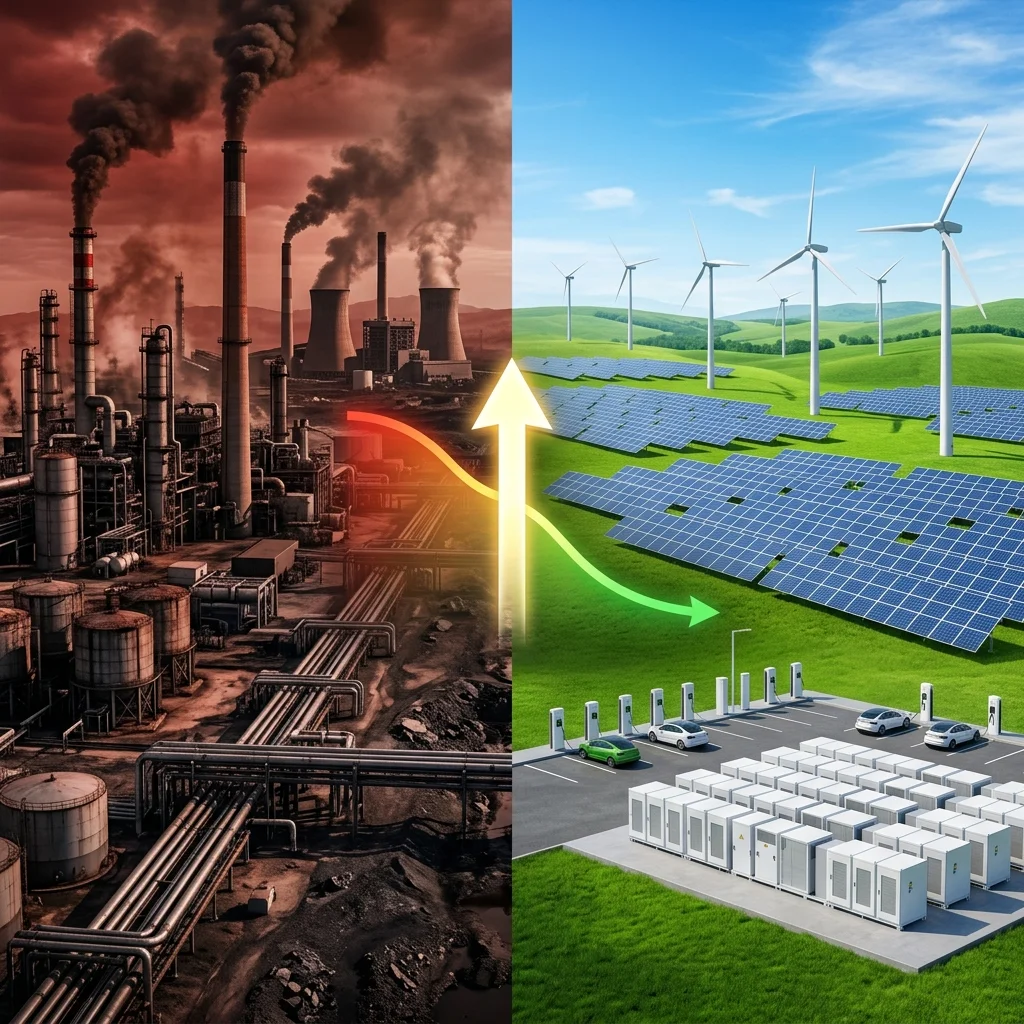
The global environmental technology sector is entering an era of accelerated transformation. Structural forces across climate policy, energy markets, supply chains, digital infrastructure, and corporate sustainability are redefining competition and growth pathways. This report highlights five critical trends that will shape the green technology landscape in 2026, drawing on market data and forward-looking analysis. These trends—expanding carbon pricing, decentralized renewables, supply chain resilience, AI-enabled monitoring, and platform ecosystems—will determine how businesses, governments, and communities achieve long-term ecological resilience while navigating economic realities.
Introduction
As the world confronts escalating climate risks and resource constraints, the pace of green technology adoption has become a defining feature of modern economic development. From solar and wind to carbon capture and AI-driven conservation, environmental innovation is no longer a niche focus but a core component of industrial strategy. The year 2026 promises to be a watershed, as policy interventions, technological breakthroughs, and shifting market structures converge. This article examines the key trends that will shape the intersection of technology, business, and the environment, providing a nuanced perspective for decision-makers across sectors.
Environmental Background
The urgency of the global sustainability agenda is underscored by recent scientific assessments. Climate-related disruptions, biodiversity loss, and resource scarcity are intensifying, prompting governments and corporations to accelerate climate action. The Paris Agreement's 1.5°C target remains a guiding objective, yet current emissions trajectories suggest more aggressive policies are needed. Simultaneously, renewable energy costs have fallen dramatically, making clean technologies increasingly competitive. These dynamics create a fertile ground for innovation but also introduce complexity in how environmental outcomes are measured, financed, and governed.
Main Analysis
1. Carbon Border Adjustment Mechanisms and Expanding Carbon Pricing Redefine Global Market Economics
The European Union's Carbon Border Adjustment Mechanism (CBAM) is entering its full implementation phase, representing a landmark shift in how carbon costs are embedded in international trade. Originally designed to prevent carbon leakage, CBAM now influences pricing structures across multiple industries worldwide. As more jurisdictions—including the UK, Canada, and potentially the US—consider similar mechanisms, the global economy is facing a new reality: emissions embodied in products will increasingly carry a price at borders. This trend echoes the medical technology sector's experience with volume-based procurement, where domestic pricing policies have global ripple effects. For multinational companies, carbon pricing is no longer a solitary policy risk but a fundamental factor in production, sourcing, and market access decisions. The expansion of carbon markets, including the growth of voluntary carbon credit trading, further reinforces the importance of robust carbon accounting and verification.
Why it matters: Carbon pricing mechanisms are accelerating Clean Technology adoption and reshaping portfolio strategies. Companies that fail to internalize carbon costs may face competitive disadvantages in key markets, while those that invest in low-carbon processes can gain preferential access and regulatory stability.
2. Decentralized Renewable Energy and Microgrids Become Central to Energy Resilience
The migration from centralized power generation to distributed energy resources is one of the most significant shifts in the energy sector. Extremely low costs for solar photovoltaics, wind turbines, and battery storage are enabling businesses, communities, and even entire regions to generate, store, and manage their own electricity. This trend is further propelled by policy changes, such as the U.S. Inflation Reduction Act and similar initiatives globally that support local energy resilience. In 2026, microgrids are expected to become an essential component of critical infrastructure, particularly in areas facing extreme weather events. As the healthcare sector witnesses a shift of procedures to outpatient settings, the energy sector is similarly moving toward more localized, flexible, and patient-specific (or consumer-specific) solutions. This transition requires new commercial models, regulatory frameworks, and grid integration strategies.
Why it matters: Decentralized renewable energy enhances energy security, reduces transmission losses, and democratizes access to clean power. For utilities and energy companies, adapting to a distributed model is essential to remain competitive in a future where consumers are also producers.
3. Supply Chain Pressures Reshape Clean Technology Manufacturing
Global trade tensions, tariff uncertainties, and supply chain bottlenecks are compelling clean technology manufacturers to reassess their production footprints. The concentration of rare earth elements, lithium, and other critical minerals in a few geopolitical regions has become a strategic vulnerability. In response, companies are diversifying sourcing, investing in recycling technologies, and building multi-region manufacturing capacities. The European Chips Act, the U.S. Defense Production Act for critical minerals, and similar initiatives are catalyzing a semiconductor- and battery-manufacturing renaissance across Western economies. This trend mirrors the medical device industry's response to supply chain volatility, where resilience is now a competitive advantage. As extreme weather events disrupt logistics networks, firms are prioritizing robustness over lean efficiency.
Why it matters: The transition to clean energy is material-intensive. Supply chain resilience will determine the pace and cost of deploying solar panels, wind turbines, electric vehicles, and energy storage systems. Companies that strategically position their manufacturing and sourcing will be better equipped to weather global volatility and meet rising demand.
4. AI and Digital Monitoring Transform Environmental Governance and Conservation
Artificial intelligence and remote sensing technologies are becoming indispensable tools for environmental management. From satellite-based deforestation detection to AI-powered wildlife tracking and predictive modeling of air and water quality, digital platforms are enabling real-time decision-making. In 2026, these technologies are progressing beyond pilot projects to become operational infrastructure for governments, NGOs, and corporations alike. Advanced analytics are improving the accuracy of emissions inventories, enhancing the monitoring of nature-based solutions, and supporting compliance with Environmental, Social, and Governance (ESG) reporting standards. This is analogous to the medical technology field, where advanced imaging and navigation systems have shifted from adjuncts to central components of integrated clinical workflows. In the environmental context, AI is not a silver bullet but a powerful enabler of evidence-based governance.
Why it matters: Reliable environmental data is essential for effective policy, investment, and conservation action. AI and digital tools enhance transparency, accountability, and the ability to measure ecological outcomes, thus underpinning trust in carbon markets and sustainability claims.
5. Platform-Based Competition in Clean Energy and Sustainability Management
The convergence of clean energy, digital technology, and finance is giving rise to platform-based business models. Energy management systems, carbon accounting software, and integrated sustainability platforms are no longer standalone tools but are becoming central hubs that connect devices, stakeholders, and capital flows. Companies such as Siemens, Schneider Electric, and emerging startups are building open ecosystems that offer end-to-end visibility across energy usage, emissions, and supply chain performance. These platforms facilitate the monetization of flexibility, enable peer-to-peer energy trading, and streamline corporate ESG reporting. As with enabling technologies in medicine, platforms are redefining how companies deliver value and maintain customer relationships in the environmental sector.
Why it matters: Platform-based competition can accelerate the adoption of sustainable practices by lowering transaction costs and improving data interoperability. Businesses that embrace these ecosystems can unlock new revenue streams and create systemic efficiencies, while regulators and investors benefit from standardized, verifiable sustainability metrics.
Ecological & Economic Impact
The trends outlined above have profound implications for climate resilience, biodiversity, and natural resource management. Expanding carbon pricing and the growth of decentralized renewables directly contribute to reducing greenhouse gas emissions, mitigating climate change, and lowering air pollution. AI-enabled monitoring improves the effectiveness of conservation programs and helps protect vulnerable ecosystems. Supply chain restructuring can reduce the ecological footprint of manufacturing, particularly if accompanied by circular economy principles. Economically, these trends create investment opportunities in clean technology, drive innovation, and potentially lower long-term costs associated with climate damages. However, economic trade-offs are real: the transition may disrupt fossil-fuel-dependent communities, and the implementation of carbon borders can raise consumer prices in the short term. It is critical to couple technological advancement with social safety nets and just transition strategies.
Policy & Industry Perspectives
Policy coherence is essential to maximize the benefits of these trends. International cooperation on carbon accounting standards, mutual recognition of carbon borders, and technology transfer mechanisms will be crucial. The recent agreement at COP28 to transition away from fossil fuels provides political momentum, but implementation remains challenging. Industry leaders are increasingly advocating for stable and predictable regulatory frameworks to guide investment in long-lived infrastructures. ESG frameworks are evolving from voluntary to mandatory disclosure regimes, compelling organizations to integrate environmental factors into core business strategy. Academic and scientific communities have a vital role in validating measurement methodologies and setting science-based targets.
Future Outlook
The next 5–20 years will be defined by the scaling of these solutions and the emergence of new synergies. Carbon neutrality targets and nature-positive commitments will require unprecedented levels of investment and technological innovation. The integration of AI with environmental monitoring is expected to yield deeper insights into ecosystem dynamics, enabling adaptive management at regional and global scales. Renewable energy systems will likely become the default source of new power generation, with grid-scale storage and green hydrogen providing seasonal flexibility. Circular economy principles will gain traction as resource constraints intensify, and circular supply chains will become a competitive differentiator. Ultimately, the ability to manage the twin crises of climate change and biodiversity loss will depend on our collective capacity to align economic incentives with ecological boundaries.
Conclusion
The year 2026 stands at the cusp of a new era in environmental technology. The convergence of carbon pricing, decentralized energy, resilient supply chains, AI-driven governance, and platform ecosystems offers an unprecedented opportunity to accelerate the global sustainability transition. Policymakers, businesses, and investors must recognize these trends not as isolated developments but as interconnected forces that will shape ecological and economic systems for decades. By embracing innovation while maintaining scientific rigor and ethical responsibility, humanity can enhance long-term environmental resilience and prosperity.
---
This article is adapted from trends analysis originally published by Clarivate for the healthcare sector, reflecting parallel dynamics in environmental technology. For further reading, see the original report.